
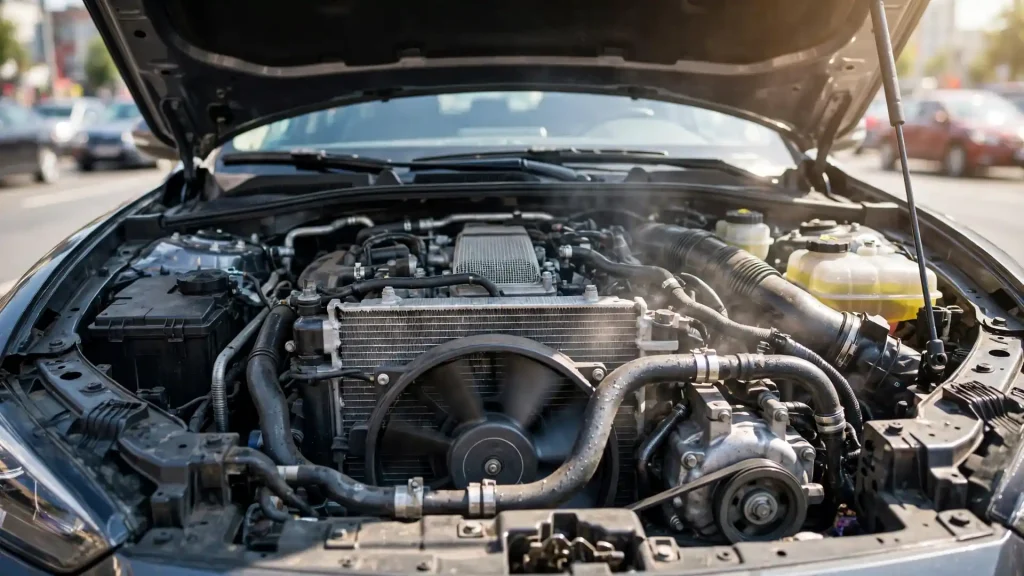
A car AC that blows cold air while driving but turns warm at traffic lights can make every journey uncomfortable. This problem is especially common during hot weather, when the cooling system has to work harder to keep the cabin comfortable.
Your car AC may stop cooling when idling because the condenser cooling fan is not working properly, the condenser is blocked with dust, or the refrigerant pressure is not within the correct range.
A weak AC compressor may also struggle to cool the cabin at low engine speeds. Other possible causes include low refrigerant, a faulty pressure sensor, and electrical problems. Finding the exact cause early can help prevent further damage and avoid expensive repairs.
Why Does Car AC Cooling Change When the Engine Is Idling?
When your car is moving, air flows through the front grille and across the AC condenser. This airflow helps remove heat from the refrigerant so the system can produce cold air.
When the car stops, natural airflow drops, and the cooling fan must do most of the work. If the fan is weak, the condenser is dirty, or another AC part is not working correctly, cooling performance can fall.
In Sharjah’s hot weather, this problem can become more noticeable because the AC must remove more heat from the cabin.
Common Reasons Your Car AC Stops Cooling When Idling
Several parts of the AC system work together to cool the cabin. A problem with one part can reduce cooling when the engine is running at low speed. These are the main causes to check.
1. Faulty Condenser Cooling Fan
A faulty cooling fan is one of the first things to check when the AC becomes warm at traffic lights but cools again while driving. The fan pulls or pushes air through the condenser when the car is stationary.
If its motor fails, the fan runs slowly, or its relay or fuse is damaged, the condenser cannot release enough heat. Refrigerant pressure may then rise, causing the system to reduce cooling or switch off the compressor for protection. A technician should check fan operation, wiring, relays, fuses, and the fan motor.
2. Dirty or Blocked AC Condenser
The condenser is located near the front of the car and releases heat from the refrigerant. Dust, sand, leaves, and insects can collect on its fins and block airflow. When the car is moving, outside air may provide enough airflow to support cooling.
At idle, however, the blocked condenser may struggle to release heat. This can raise refrigerant pressure and make the AC blow warm air.
Cleaning the condenser carefully can improve heat transfer. The fins are delicate, so high-pressure water or rough cleaning should be avoided because it can damage them.
3. Low Refrigerant Level
Refrigerant carries heat from the cabin to the outside air. If the system has lost refrigerant through a leak, it may not cool effectively, especially when the AC is under heavy demand. The compressor may also cycle on and off as system pressure changes.
You might notice weak cooling at idle and slightly better cooling while driving, although this symptom alone does not confirm low refrigerant.
A technician should measure the system pressure and test for leaks. Simply adding refrigerant without finding the cause can provide only temporary relief and may lead to further problems.
4. Weak AC Compressor
The compressor moves refrigerant through the cooling system and creates the pressure difference needed for heat transfer. If it is worn or damaged, it may not pump refrigerant effectively under certain operating conditions.
At idle, the engine runs at a lower speed than it does while driving, so a weak compressor may struggle to meet the system’s cooling demand.
The AC may produce some cold air at higher engine speeds but become warm when the car stops. Pressure testing and compressor checks can help identify the fault before a replacement is considered.
5. Faulty Compressor Clutch
Many vehicles use an electromagnetic clutch to connect the AC compressor to the engine drive. When cooling is needed, the clutch engages and allows the compressor to operate.
If the clutch is worn, its coil is weak, or the gap is incorrect, it may fail to engage reliably. Heat can make some electrical clutch faults more noticeable.
You may hear a clicking sound as the compressor switches on and off, followed by changes in vent temperature. A technician can test the clutch, coil, power supply, and related wiring to find the cause.
6. Incorrect Refrigerant Pressure
The AC system operates within a pressure range set by the vehicle’s design and current operating conditions. Pressure that is too high or too low can affect cooling.
Low pressure may point to a leak or an incorrect refrigerant charge, while high pressure may be linked to a blocked condenser, a faulty fan, or too much refrigerant.
The system may switch off the compressor when pressure reaches an unsafe level. A technician can check both high-side and low-side pressure and compare the readings with the vehicle manufacturer’s specifications.
7. Faulty AC Pressure Sensor
Modern cars use pressure sensors or switches to monitor refrigerant pressure. These parts send information to the control system, which uses it to decide whether the compressor should run.
If a sensor sends incorrect readings, the system may switch the compressor off even when the actual pressure is acceptable. The AC can then become warm at idle or cycle on and off unexpectedly.
A diagnostic scan and pressure test can help confirm whether the sensor is faulty. Replacing it without checking the rest of the system may not solve the problem.
8. Electrical Problems
The AC relies on several electrical parts, including fuses, relays, wiring, sensors, the cooling fan, and the compressor clutch. A loose connection or damaged wire may interrupt power when the engine is hot or vibrating at idle.
A failing relay can also work at first and then stop supplying power. These faults may cause the AC to cool unevenly or stop working while the car is stationary.
Electrical testing can check voltage, resistance, wiring connections, and control signals. Proper diagnosis helps avoid replacing parts that are still working correctly.
9. Dirty Cabin Air Filter
The cabin air filter catches dust, sand, and other particles before air enters the passenger cabin. When it becomes blocked, less air can pass through the evaporator and reach the vents.
This can make the cabin feel warm even if the refrigeration system is still producing cold air. A dirty filter is not usually the main cause when cooling changes only at idle, but it can make an existing problem more noticeable.
Inspecting and replacing the filter when needed is a simple maintenance step that supports good airflow and cooling performance.
10. Engine Cooling Problems
The engine cooling system and the AC system are separate, but they can affect each other. The radiator and AC condenser sit close together in many cars and may share cooling fans.
If the radiator fan is not working or the engine temperature rises too high, the vehicle may reduce or stop AC operation to protect the engine.
You may notice warm air at idle along with a rising engine temperature gauge. If the engine starts overheating, switch off the AC and stop somewhere safe. Do not continue driving an overheating car, as this can cause serious engine damage.
Why Does the AC Become Cold Again When Driving?
When the car starts moving, air passes through the condenser more quickly. This helps the refrigerant release heat and can lower system pressure. If the cooling fan is weak or the condenser is partly blocked, the extra airflow may temporarily make up for the problem.
The AC then begins cooling again. This pattern is a useful clue, especially when the vents become warm at traffic lights and cold on open roads. However, it does not prove that the fan is faulty. Condenser condition, refrigerant pressure, and compressor operation should all be checked.
How Can Sharjah's Hot Weather Affect AC Cooling at Idle?
High outdoor temperatures make it harder for the AC system to remove heat from the cabin. When the car is parked in direct sunlight, the dashboard, seats, and interior surfaces can become very hot. At idle, the condenser receives less natural airflow, so the cooling fan must work effectively to release heat.
Dust and sand can add to the problem by blocking condenser fins. Long traffic jams also mean the system spends more time working under heavy demand. Regular maintenance is especially useful for cars driven daily in Sharjah’s hot and dusty conditions.
How to Tell Whether the Cooling Fan Is Causing the Problem
Notice whether the AC becomes warm when the car stops and cools again once you start driving. This pattern can point to a fan or condenser airflow problem. You may also hear that the fan is not running when the AC is on, or notice that the cooling performance becomes worse during traffic.
However, fan operation varies by vehicle, system pressure, and temperature, so the fan does not need to run continuously in every situation. A technician can check its operation under the correct conditions. Keep your hands away from the fan because it can start automatically.
What Should You Do When Your Car AC Stops Cooling at Traffic Lights?
Start by noting when the problem happens. Check whether the AC cools properly at road speed, whether the airflow from the vents is strong, and whether the engine temperature remains normal.
Avoid repeatedly raising the engine speed to force the AC to cool. Do not add refrigerant without checking the system, and do not touch moving fans or hot engine parts. Arrange an inspection if the problem continues.
A technician can check the condenser, cooling fan, refrigerant charge, compressor, clutch, pressure sensors, and electrical system. If the engine temperature rises above normal, stop safely and address the overheating problem before continuing the journey.
How Is an AC Cooling Problem Diagnosed?
A proper diagnosis starts with confirming the symptoms while the engine is running under suitable conditions. The technician can compare cooling performance at idle and at higher engine speeds.
Pressure gauges help measure the high-side and low-side pressures, while a scan tool can check sensor readings and fault codes.
The cooling fan, condenser, compressor clutch, wiring, and refrigerant lines should also be inspected. If the refrigerant level is low, a leak test may be needed. These checks help identify the actual cause instead of replacing parts based only on symptoms.
How Can You Prevent AC Problems at Idle?
Regular maintenance can reduce the chance of losing AC cooling in traffic. Keep the condenser clean, replace the cabin air filter when required, and have the cooling fan checked if cooling performance changes.
If the AC needs refrigerant repeatedly, arrange a leak test instead of continuing to recharge it. Pay attention to unusual noises, frequent compressor cycling, and changes in vent temperature.
Following the vehicle manufacturer’s service schedule can also help identify worn parts early. In hot climates, fixing small faults before summer can help the AC cope with heavy daily use.
When Should You Get Professional Car AC Repair?
You should arrange professional service if the AC repeatedly blows warm air at idle, the compressor switches off unexpectedly, or cooling changes sharply between traffic and road speeds.
Unusual noises, refrigerant leaks, and weak airflow are other reasons to get the system checked. If the engine temperature rises, treat it as a separate warning that needs immediate attention.
A trained technician can test the cooling fan, condenser, refrigerant pressure, compressor, and electrical parts. Early diagnosis can help prevent a minor issue from causing more expensive damage.
Conclusion
Your car AC may stop cooling while idling because the condenser cooling fan is weak, the condenser is dirty, refrigerant pressure is off, or the compressor isn’t working properly.
Faulty sensors, electrical issues, and engine cooling problems can also affect AC performance. If the air becomes cold again when you start driving, the change in airflow may be an important clue, but proper testing is needed to confirm the cause.
Regular AC maintenance can help prevent these problems, especially in Sharjah’s hot and dusty weather. Keeping the condenser clean, checking the fan, and repairing refrigerant leaks early can help maintain steady cooling and reduce the risk of costly repairs.
If your car AC warms up at traffic lights or stops cooling while idling, contact Car AC Repair Sharjah for a professional inspection and repair. A proper diagnosis can help restore reliable cooling and make your daily drives more comfortable.